

Cards and Crustaceans: A Dive Into The Creative Process With Board Game Designer Rick Gardner
- Cassie Bond

- Apr 11
- 5 min read
Updated: Apr 16
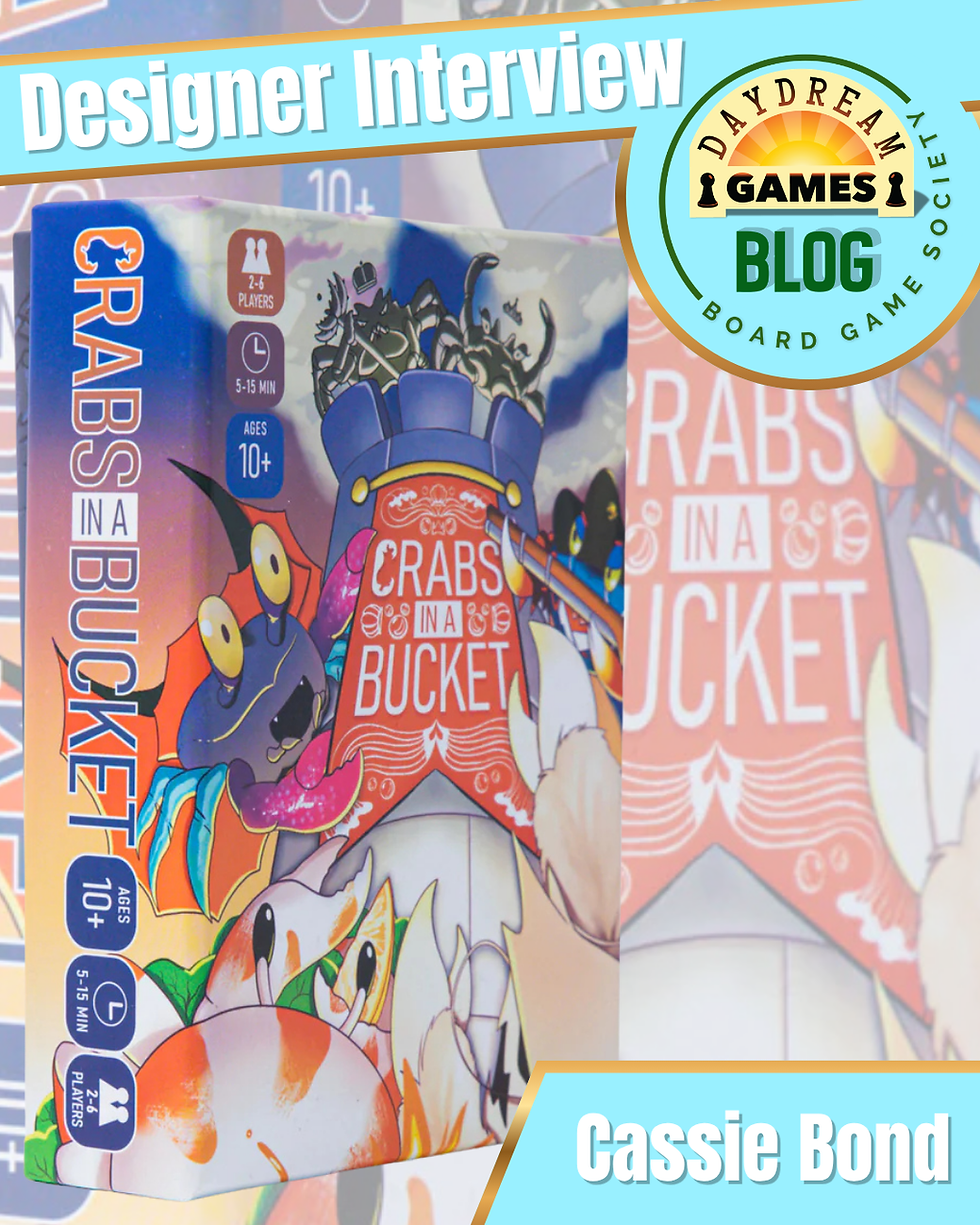
Rick Gardner created the first game we featured in our Board Game Society, Crabs in a Bucket. We met Rick at Origins in 2024, and we fell in love with his game and all of the different crustaceans it featured. I was able to conduct an exclusive interview with Rick, where we spoke about his experiences designing games and his time participating in the Board Game Society. My goal with this interview was to learn about his game design process and gather some helpful information for new game designers.
Beginnings
Rick got the idea for Crabs in a Bucket after playing some other hand-shed style card games. He saw potential for something more interesting, and began dabbling with adjusting the rules and adding different unique abilities. He didn’t have dreams of conquering the board game industry or even starting a business. He didn’t know anything about Kickstarter or how to sell his board game once he had it completed. He only had this idea for a game, believed in it, and created it.
Design
Rick began designing Crabs in a Bucket around the theme of tarot cards. The tarot cards were good, but they didn’t feel exactly right.
Ultimately he moved away from this, and after some playtesting, Rick realized he needed something with mass appeal. He decided to create the theme from the ground up, and began thinking of the name. He wanted something that aligns to how you feel when you play the game, and, as he said:
"When you play Crabs, you do feel like crabs in a bucket, trying to pull each other down, rather than trying to get ahead."
So, he had the name, and he just needed the crabs. He spent a good amount of time looking up different types of crabs that exist, and he shifted the Major Arcana- the typical tarot card themes- to different crabs, and researched facts about them.
Rick said that there are a lot of really neat crabs out there that he had not heard of before researching for his game. He really likes the Clown crab, which is the size of your fingernail, and the Giant crab, which can grow up to 40 pounds. But he said his favorite is probably the Sleepy Crab. It walks around carrying a sea sponge in real life, so they depicted him holding something similar in the game.

The theme was the largest change he made to Crabs in a Bucket during development. Once he decided on crabs, he hired his artist, and everything seemed to flow from there. He did say there were about five distinct versions of the game, when he was trying to get the mechanics perfected. The first version of Crabs in a Bucket would likely be unrecognizable to players of the current version. But he had the majority of the mechanics after the second version.
Challenges
The most persistent problem that Rick had while designing Crabs in a Bucket and still through today has been funding. Rick started his board game design career while still a student, so he did not have any extra money laying around. The support of fans and players of Crabs has greatly helped him be able to continue on his game design journey, and during the interview, Rick expressed his gratitude to all of his supporters. As he pointed out, it takes a large amount of capital to be able to design and publish games, which is why often when you speak to successful game designers, they’re typically in their thirties or forties, so they’ve had time to save. It doesn’t take a huge amount of money, but it does require planning.
According to Rick, there are programs that can help game designers, such as the one he was granted last year: the Horizons Fellowship. This was started by Nick and Camilla Smith, with GAMA. GAMA is a massive orginization of game designers, pblishers, retailers, artists, and others in the game design industry. They are responsible for putting on the Origins Game fair each year. It provides people with diverse backgrounds a little funding and a lot of spotlight within GAMA and at Origins, with a free booth and hotel and a small travel stipend. Rick found this very helpful, even with him having had some time in the world of board game design. He highly recommended it for qualifying individuals.
Marketing
Rick went through his design process, and was ready for printing after two years. Then, he went to Kickstarter. He worked with a marketing agency to promote his Kickstarter, but that didn’t work out quite as well as he had hoped it would. He said they were very nice people, but he wasn’t equipped with the kind of assets they needed, and while they did boost the Kickstarter campaign for him, it cost a significant amount to hire them. In the end, he nearly evened out. Since then, Rick has not used a marketing agency for any of his Kickstarters. He said he may try again in the future, as some of the newer marketing companies have been more beneficial for other people, but for now he is going it alone.
“If you know in your heart that this is what you have to do, you have no choice but to put everything into it and push it all the way through, even if it's at the expense of your ability to be able to live safely and comfortably. If you're pregnant with an idea, you have to let that baby come to life and live its life in full. It's not the idea that's born inside of your mind, and I think you have to have that kind of willingness in order to be able to make it all the way through to the end and make those things a reality. And I think most people are more rational than me. Most people, I think, are smarter about protecting themselves than me. And I think for that reason, most people don't do what I do. And so I think if somebody feels like they have something that's worth coming into the world in this kind of way, you have to be willing to close your eyes and push it all the way through and decide that this is going to exist, and you're going to shape everything in your life around being able to make that happen. And if that's not for you, that's okay. But I think those, those folks that do have that idea need to make it happen, no matter what happens.”
Board Game Society
When asked about his time with the Board Game Society, Rick expressed that he is incredibly grateful for his time with us, and was thrilled that he was our first choice. He enjoys seeing all of the other small creators that have gone through the program and get to expand their fanbase.
We had a fantastic time working with Rick and demoing Crabs in a Bucket in store. We all love both the base game and the expansion, Shrimpocolypse. We can't wait to see what Rick does next, maybe even including another expansion to Crabs in the future. His newest project, Zeit Heist, has been fully funded on Kickstarter and we can't wait to get our hands on a copy to play!
You can late back the project here to secure your copy of this exciting, time-travel thriller!
You can purchase Crabs in a Bucket here, or you can subscribe to the Board Game Society to get games made by small creators sent to your door every single month!
If you are a small game designer, and would like your game to be featured in the Board Game Society, you can reach out to us
here.


Comments